Wings Across America: The Mind-Blowing Duck Migration Adventure Every Kid Should Know About
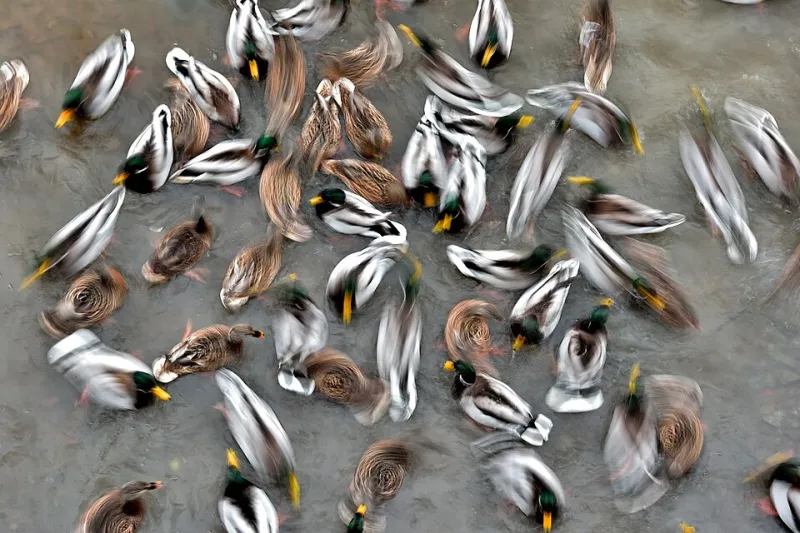
Photo: Александр Байдуков, CC BY-SA 4.0, via Wikimedia Commons
Imagine being told that every single year, without GPS, without Google Maps, and without a single gas station snack, you had to fly thousands of miles to a completely different part of the country — and then find your way back in the spring. No pressure, right? Well, that's just a regular Tuesday for a migrating duck. These feathered frequent flyers are pulling off one of the greatest natural spectacles on the planet, and the best part? Your kids can actually track them, learn from them, and become real-life citizen scientists in the process. Buckle up — or rather, flap up — because this is going to be a wild ride.
Why Do Ducks Even Bother Moving?
Before we start plotting migration routes, let's answer the big question kids always ask: Why can't the ducks just stay put?
Great question, tiny scientist. The short answer is: food and survival. As temperatures drop across the northern United States and Canada in the fall, the ponds, lakes, and wetlands where ducks feed start to freeze over. A frozen pond is basically a restaurant with a "Closed" sign on the door. No open water means no aquatic plants, no insects, and no small fish — which is pretty much the entire duck menu.
So ducks do what any sensible creature would do: they head south, where the water stays liquid and the buffet stays open. In the spring, when things warm back up and the days get longer, they follow that signal back north to breed. It's a cycle that has been running like clockwork for tens of thousands of years, and it is spectacular.
The scientific term for this seasonal movement is migration, and it's driven by a combination of factors including changing day length (called photoperiod), temperature shifts, and something researchers believe is an internal biological clock. In other words, ducks have a built-in alarm that says, "Time to move, pal." Scientists are still learning exactly how ducks navigate, but evidence points to their ability to sense the Earth's magnetic field, use star patterns at night, and recognize major landmarks like rivers and coastlines. Yes, ducks are basically flying with a superpower.
The Four Flyways: America's Duck Highways in the Sky
Here's where things get really cool for map-loving kids. Duck migration across North America doesn't happen randomly — ducks follow broad geographic corridors called flyways. Think of flyways as invisible superhighways in the sky, and there are four major ones across the US:
- The Atlantic Flyway — Runs along the East Coast from Canada down through Florida. If you live in states like New York, Virginia, or Georgia, ducks are literally flying over your house.
- The Mississippi Flyway — Follows the Mississippi River valley, one of the busiest duck migration routes in the world. States like Minnesota, Illinois, and Louisiana are right in the thick of it.
- The Central Flyway — Cuts through the Great Plains, from the prairie potholes of the Dakotas all the way down to the Gulf Coast of Texas.
- The Pacific Flyway — Hugs the West Coast and mountain ranges, carrying ducks from Alaska and Canada down to California and beyond.
Activity idea: Pull up a blank US map and have your kid draw these four flyways. Then look up which flyway runs closest to your home. Suddenly, that flock of ducks you see overhead in November isn't just "some birds" — it's a specific journey happening right above your neighborhood.
How Far Do They Actually Go?
The distances involved in duck migration are genuinely mind-bending. Some species, like the Northern Pintail, travel from their breeding grounds in Alaska all the way to California, the Gulf Coast, or even Central America — a trip that can exceed 3,000 miles. The Blue-winged Teal is another overachiever, sometimes winging it all the way to South America.
And they don't poke along either. Ducks typically cruise at speeds between 40 and 60 miles per hour, and during strong tailwinds, some species have been clocked even faster. A duck traveling 500 miles in a single night isn't unusual. To put that in perspective: that's roughly the distance from Chicago to New York City — flown overnight, without stopping for coffee.
For kids who are into math, this is an excellent moment to bust out some calculations. If a duck flies 50 mph for 10 hours straight, how far does it travel? How many days would a 3,000-mile trip take if the duck flies 8 hours a day? Suddenly, migration is a word problem that's actually interesting.
The Challenges Ducks Face on the Road
Migration isn't all scenic views and tailwinds. Ducks face some serious obstacles along the way, and understanding these challenges helps kids appreciate just how tough (and amazing) these birds really are.
Weather: Storms, strong headwinds, and sudden cold snaps can ground or exhaust migrating ducks. Hunters and birders often refer to big weather events pushing large numbers of ducks southward quickly as a "flight" — and it's one of the most dramatic migration events to witness.
Habitat loss: This one matters a lot, and it's worth discussing with older kids. Wetlands — the rest stops and feeding grounds ducks depend on during migration — have been drained and developed at an alarming rate across the US. Organizations like Ducks Unlimited have worked for decades to protect and restore these critical habitats. Every wetland saved is basically a rest stop kept open on the duck highway.
Predators: Hawks, eagles, and foxes are all watching for tired, vulnerable ducks during migration. Traveling in flocks provides some safety in numbers — which, hey, connects right back to what we know about duck teamwork!
Become a Citizen Scientist: Track Ducks in Your Backyard
Okay, here's the part where your kid goes from passive learner to actual scientist. No lab coat required (although we fully support wearing one for dramatic effect).
eBird by Cornell Lab of Ornithology is a free app and website where anyone — including kids — can log bird sightings and contribute real data to scientific research. When your family spots ducks at a local pond or park during fall or spring migration, you can report what you saw, how many, and where. That data gets added to a massive global database used by real ornithologists. Your kid's duck sighting in suburban Ohio could literally end up in a scientific paper. How cool is that?
Peak migration times to watch for in the US:
- Fall migration: September through November, with October being prime time in most of the country
- Spring migration: February through April, when ducks head back north
What to look for: Mallards are the most widespread and easiest to spot. But during peak migration, keep your eyes open for Northern Pintails (elegant, with a long pointy tail), Buffleheads (tiny with a big white patch on their head), and Canvasbacks (a reddish-brown head and bright white body).
Bring binoculars, a field guide or a bird ID app like Merlin Bird ID (also free from Cornell), and a notebook. Make it a family event. Whoever spots the most species gets to pick dinner. That's science and motivation.
The Big Picture: Why Duck Migration Matters
Ducks aren't just cool to watch — they're a vital part of healthy ecosystems. As they travel, they spread seeds, help control insect populations, and serve as an indicator species for wetland health. When duck populations are thriving, it usually means the waterways and wetlands they depend on are in good shape. When numbers drop, it's often a signal that something in the environment needs attention.
Teaching kids to care about duck migration is, in a sneaky and wonderful way, teaching them to care about the health of our water, our land, and our planet. And it all starts with looking up at the sky in October and noticing that those V-shaped formations overhead aren't just birds — they're travelers on a 3,000-mile adventure, navigating by starlight and magnetic fields, doing something that has blown scientists' minds for generations.
Not bad for a creature best known for going "quack."