Toons vs. Ponds: The Wildly Funny Gap Between Cartoon Ducks and the Real Deal

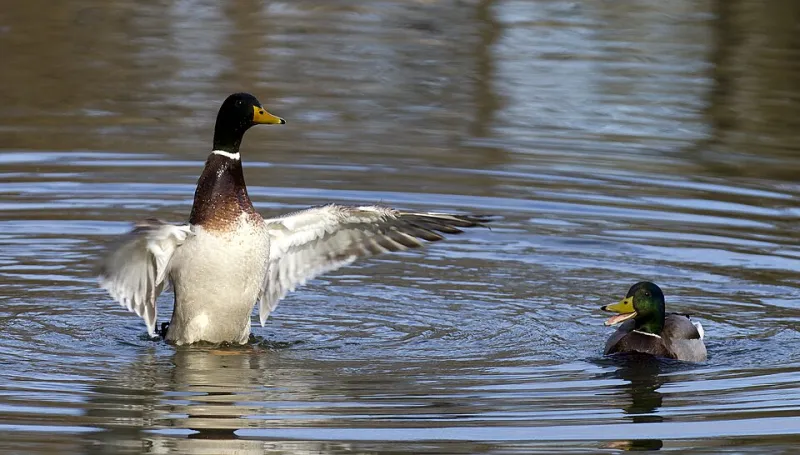
Photo: M-o-456X78, CC BY-SA 4.0, via Wikimedia Commons
Let's set the scene. Your kid has watched approximately four thousand hours of animated duck content. They've seen a certain speech-impaired duck in a sailor suit lose his temper over a fishing rod. They've cheered for a greedy, top-hat-wearing tycoon swimming laps in a vault of gold coins. They've witnessed a wise-cracking mallard outwit hunters, robots, and the entire concept of gravity itself.
So naturally, the first time they visit a real duck pond, they fully expect some kind of quippy one-liner. Maybe a pratfall. At the very minimum, a strongly worded complaint about the quality of the breadcrumbs on offer.
Instead? A duck stares at them, tips its head sideways in the most unsettling way possible, and then bites their shoelace.
Welcome to the gap between cartoon ducks and actual ducks — a gap so enormous you could fly a V-formation migration through it.
The Voice Situation (Or Lack Thereof)
Cartoon ducks talk. They argue, scheme, deliver punchlines, and occasionally break into song. Daffy Duck's legendary lisp alone has spawned decades of impressions at dinner tables across America. Donald Duck's unintelligible rage-muttering is somehow the most emotionally relatable thing ever animated.
Real ducks? They quack. Specifically, female ducks quack — that classic, honking "QUACK" you hear in your head right now. Male ducks, called drakes, actually make a much quieter, raspier sound. Some species barely make any noise at all and instead communicate through head-bobbing, wing-flapping, and what can only be described as aggressive staring.
Here's the kicker that kids absolutely love: if a real duck were cast in a cartoon based purely on vocal talent, the female Mallard would get the lead role, and every single male duck would be stuck doing background crowd noises. Nature's casting director has a serious sense of humor.
Physics? Never Heard of Her
Cartoon duck logic operates on a beautifully broken set of physical rules. Characters run off cliffs and hang in midair until they look down. They get flattened by boulders and pop back into shape like feathered balloons. Explosions leave them covered in soot but otherwise completely fine and ready for the next scene.
Real ducks, meanwhile, are actually doing something way more impressive — they're just doing it quietly and without a laugh track.
Real ducks are waterproofed by science. Their feathers are coated in oil from a gland near their tail, which they spread around during preening. Water literally rolls off a duck's back (yes, that's where the phrase comes from), and underneath all those outer feathers is a layer of fluffy down that stays completely dry no matter how long the duck is swimming. They are, in effect, wearing a naturally engineered wetsuit that they maintain themselves.
A cartoon duck would need three episodes and a montage to accomplish something that real ducks do every single morning before breakfast.
The Waddle: Exaggerated Comedy or Actual Biomechanics?
Cartoon animators have leaned hard into the duck waddle. It's the signature move — side to side, slightly ridiculous, impossible to take seriously. It's visual comedy gold.
But here's the thing: real ducks waddle for a genuinely fascinating reason. Their legs are positioned far back on their bodies to make them incredible swimmers. On land, this means they shift their weight side to side with every step because they literally have no other option. They're not doing it for laughs. They're doing it because evolution decided swimming mattered more than a dignified walking gait.
The result? Every duck on the planet walks like it just got off a really long boat ride and isn't quite ready to commit to land yet. Cartoons didn't exaggerate the waddle — they actually toned it down to make it look more intentional.
Cartoon Ducks Have Incredible Fashion. Real Ducks Have... Also Incredible Fashion?
Donald Duck wears a sailor suit and no pants. Scrooge McDuck rocks a top hat and spats. Daffy Duck has gone through more costume changes than a Broadway production.
Real male ducks — particularly Mallards — are genuinely, objectively gorgeous during breeding season. That iridescent green head isn't just green; it shifts to blue and purple depending on the light, like a tiny living gemstone. They've got a crisp white collar, a chestnut-brown chest, and a curled tail feather that's basically a living accessory.
Then, after breeding season ends, male ducks go through something called an "eclipse molt" where they shed all those fancy feathers and look almost exactly like the females — brown, speckled, and deeply unbothered. They go from runway model to "who wore it better? Honestly nobody" in the span of a few weeks.
If that's not cartoon character energy, nothing is.
The Villain Arc: Cartoon Hunters vs. Real Duck Survival Skills
In classic cartoons, the hunter is always the bumbling antagonist. He's got a dog that's smarter than him, a hat that gets shot off repeatedly, and absolutely zero chance of ever catching the wisecracking duck protagonist. The duck wins every single time through cleverness, misdirection, and sheer audacity.
Real ducks have also developed genuinely clever survival strategies — they just don't involve disguising themselves as barbers or convincing their pursuer to shoot the other guy.
Female ducks perform a "broken wing display" to lure predators away from their nests. They'll literally fake an injury, hobble around dramatically, and lead the threat far away from their ducklings before suddenly recovering and flying off. It's one of nature's great performances, completely unscripted, and arguably more satisfying than anything written by a cartoon writers' room.
Ducks also sleep with one eye open — literally. Half their brain sleeps while the other half stays alert. When sleeping in a group, the ducks on the outer edges of the flock keep their outward-facing eye open to watch for danger. They are, at all times, partially awake and ready for trouble. Relatable? Deeply.
What This Means for Your Little Duck Fans
Here's the beautiful thing about the cartoon-versus-reality gap: it doesn't make cartoons less magical, and it doesn't make real ducks less amazing. They're both wonderful for completely different reasons.
Cartoon ducks teach kids about storytelling, comedy timing, and the deeply satisfying concept that the underdog (or under-duck) can outsmart a bigger opponent. They're aspirational in the most ridiculous, delightful way.
Real ducks teach kids that nature is already doing things so weird and wonderful that you couldn't make them up. Waterproof feathers, one-eyed sleeping, dramatic fake injuries, iridescent fashion that changes with the seasons — the actual duck is a marvel that requires zero animation budget.
Next time your kid watches their favorite animated duck outsmart a cartoon villain, maybe follow it up with a trip to the nearest pond. Let them see the real version waddling around with magnificent biomechanical purpose, one eye open, feathers perfectly dry, judging everyone within a ten-foot radius.
Honestly? The real duck would fit right into any cartoon. It just refuses to sign the contract.