Pond, Pencil, and Pure Curiosity: Your Kid's First Duck Nature Journal Starts Here
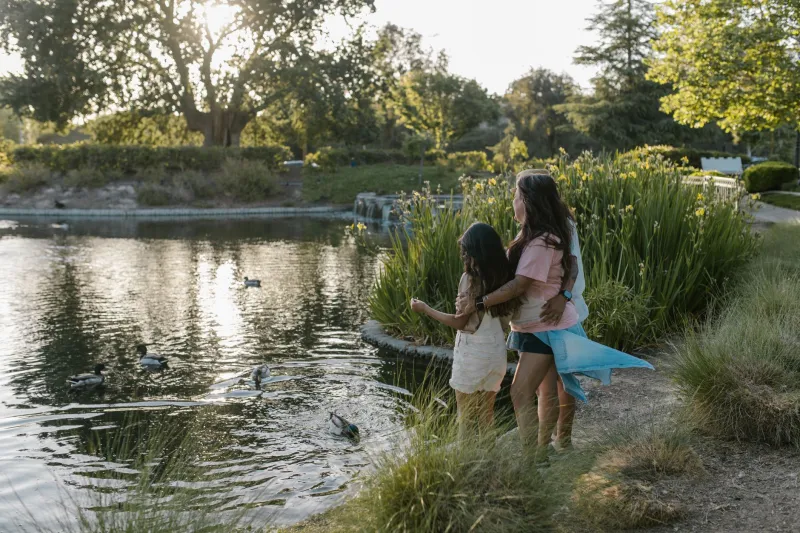
Let's be honest: ducks are basically living, waddling soap operas. There's the bossy mallard who hogs all the bread crumbs (not that we're bringing bread anymore — we've read the articles). There's the shy little female hiding behind the reeds. There's the baby duckling who keeps falling asleep mid-paddle. Every single pond visit is packed with drama, personality, and genuine scientific intrigue — and your kid is already watching it all unfold with wide eyes.
So here's the big idea: what if they started writing it down?
Nature journaling is one of those magical activities that disguises itself as pure fun while secretly turbocharging observation skills, creative writing, scientific thinking, and even emotional intelligence. And when ducks are your muse? Well, let's just say the content practically writes itself.
Why Ducks Make the Best First Nature Journal Subject
Kids don't connect with vague instructions like "observe nature." They need a character. A story. A reason to care. Ducks deliver all three.
Ducks have personalities. They have routines. They change their appearance across seasons (seriously, the male mallard's dramatic spring glow-up deserves its own reality show). They communicate with each other in ways that scientists are still figuring out. When your kid picks a specific duck to follow over weeks and months, they're not just scribbling in a notebook — they're building a longitudinal scientific record. That's the same thing real ornithologists do, just with more crayon and fewer grant applications.
The familiarity of ducks also lowers the intimidation factor. Nature journaling can feel overwhelming when kids think they need to identify every plant and insect correctly. But most kids already know ducks. That comfort zone is a launchpad.
What You Actually Need (Spoiler: It's Not Much)
Forget the fancy gear. Here's the honest starter kit:
- A blank or lightly lined notebook — composition books are cheap and durable, but any notebook works
- Pencils and a few colored pencils or watercolor pencils — for sketching feather patterns, water colors, and seasonal changes
- A magnifying glass — because duck feet are genuinely fascinating up close and kids need to know this
- A simple field guide app like Merlin Bird ID (free, from the Cornell Lab of Ornithology) — great for double-checking what species they're seeing
- A consistent pond, lake, or wetland spot — even a small neighborhood retention pond works beautifully
That's it. No laminator required.
Setting Up the Journal: Templates That Actually Work
Structure is your friend, especially for younger kids who aren't sure what to write. Here are a few simple page templates you can sketch out together before your first visit:
The "Who Did I See Today?" Page
Date, weather, time of day, and a quick sketch of the duck(s) observed. Add a color key so kids can note feather colors, bill colors, and eye color. Even a rough drawing teaches careful looking.
The "What Were They Doing?" Page
This is the behavior log. Was the duck preening? Sleeping? Chasing another duck? Dabbling (that's the upside-down feeding move — kids love learning the real scientific term). Encourage kids to describe exactly what they see, not just "the duck was swimming." How was it swimming? Fast or slow? Alone or with others?
The "Duck Feelings Report"
Okay, this one leans a little creative, but science and imagination aren't enemies. Ask your kid: If this duck could talk, what would it say right now? This prompt builds empathy, narrative thinking, and the ability to interpret behavioral cues — which is, quietly, a real scientific skill called ethology.
The "Season Watch" Spread
Dedicate two pages to a seasonal comparison chart. Leave space to note what the ducks look like in fall, winter, spring, and summer. Male mallards, for example, develop that gorgeous iridescent green head in the fall and winter months. Watching that transformation unfold in real time is genuinely thrilling for kids who've been paying attention.
Observation Prompts to Break the "I Don't Know What to Write" Freeze
Every kid hits this wall. Here's a cheat sheet of prompts to keep the pen moving:
- How many ducks did you count today? More or fewer than last time?
- Did any ducks seem to be in charge? How could you tell?
- What sounds did you hear? Try to spell them out phonetically. ("Quack" is just the beginning, trust us.)
- Did a duck do something that surprised you?
- What did the water look like today — calm, choppy, reflecting the sky?
- If you were a duck living here, what would be the best and worst parts of your day?
- Draw one duck foot. How many toes? What do you think the webbing feels like?
Mix factual observation with imaginative response. That combo is the secret sauce.
Turning Journal Entries Into Mini Science Projects
Once your kid has a few weeks of entries, the data starts to get interesting. Here are some simple ways to extend the learning:
Tally charts: Count how many ducks visit on different days or at different times. Is there a pattern? Do more ducks show up in the morning?
Weather correlation: Compare entries from rainy days versus sunny days. Do ducks behave differently? (They often do — and your kid might figure that out before they ever read it in a book.)
Species identification: If multiple duck species visit your spot, can your kid learn to tell them apart? The difference between a mallard and a gadwall is subtle but satisfying to learn.
Migration mapping: In the fall, your kid might notice certain ducks disappearing. Where did they go? Pull up a migration map together and trace the route. Suddenly the pond is connected to the whole continent.
Making It a Habit Without Making It a Chore
The number one rule of nature journaling with kids: keep it joyful. The moment it feels like homework, the notebook goes in a drawer and stays there.
Aim for short, regular visits rather than marathon sessions. Even fifteen minutes at the pond once a week builds a rich record over a year. Let your kid lead — if they want to spend the whole time drawing one duck's bill instead of filling out the behavior log, that's a win, not a failure.
Celebrate milestones. First sketch. First species identified without help. First time they noticed something you didn't. These are genuinely big deals.
And here's the thing nobody tells you: you'll start noticing more too. Turns out, slowing down at the pond and actually watching what's happening is kind of wonderful for grown-ups as well. The ducks have been putting on a show this whole time. It just took a kid with a notebook to make us finally sit down and watch.
Quack accordingly.