Before the Quack: What Science Really Says About Toddlers, Screens, and That Friendly Cartoon Duck
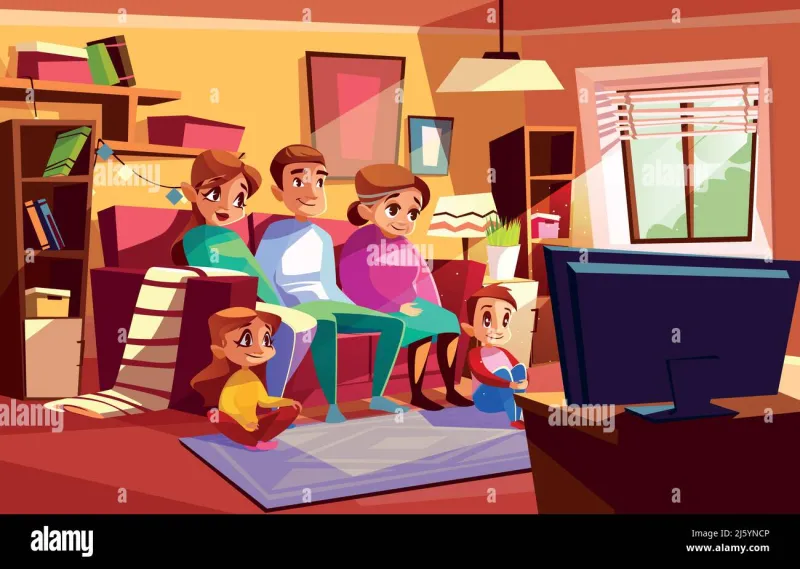
Photo: toddler watching cartoon with parent on couch together, via c8.alamy.com
Let's be honest about how this article finds you. It's either naptime-adjacent, you've got a toddler glued to a singing cartoon duck, and somewhere in your chest there's a low hum of "should I be doing this?"
We're not here to hand you guilt. We're here to hand you the actual research — and a framework you can use tonight, with any show, duck-themed or otherwise.
What the Science Actually Says
The headline finding from decades of media research is this: before age two, children learn dramatically better from real people than from screens. Researchers call it the "video deficit" — babies and young toddlers can watch a demonstration on video and then fail to imitate it in real life, even though they nailed the same task when a live person showed them. Screens, for the youngest brains, don't fully register as information about the real world.
That's why the American Academy of Pediatrics recommends avoiding screen media for children 18 to 24 months altogether (video chats with Grandma being the beloved exception), and suggests that if parents of 2-to-5-year-olds introduce media, they keep it high-quality, limited to about an hour per day, and — this is the part everyone skips — watched together.
So does that mean your toddler's favorite duck cartoon is brain poison? No. It means context is everything.
Not All Cartoons Are Built the Same
Here's where it gets useful. The research on what makes children's media "quality" is surprisingly concrete, and it gives parents a real checklist:
Pacing. Fast-cut, overstimulating shows have been linked in studies to short-term decreases in executive function in young kids — the self-control and focus skills you want growing, not shrinking. Slower-paced programs with breathing room let a toddler's brain actually process what it's seeing. A show that pauses after asking a question is doing something deliberate and good.
Story over spectacle. A duck who solves a small problem — finds a lost egg, helps a nervous friend, figures out how to share a pond — teaches narrative structure, empathy, and sequencing. A show that's just bright colors and songs teaches... that colors exist.
Language density. The best children's programs use real vocabulary, repetition, and direct address. When a character looks into the camera and asks your child a question, that's based on research showing toddlers learn more when media is responsive and conversational.
Social modeling. Does the show depict characters resolving conflict, apologizing, cooperating? Preschoolers genuinely pick up prosocial behaviors from well-designed media. They also pick up the other kind, which is worth remembering.
The Ducky Framework: Four Questions Before You Press Play
Apply this to any cartoon, any platform, any talking animal:
- Is my child under two? If yes, default to no — and if the screen comes out anyway (we live in the real world), make it brief, shared, and calm-paced.
- Could this show happen at a reasonable speed? If scenes whip by faster than you can narrate them, your toddler's brain is riding a roller coaster it didn't buy a ticket for.
- Is there a story I could talk about afterward? "What did the duck do when his friend was sad?" is where the real learning happens. Co-viewing turns passive watching into an interactive experience — it's the single biggest lever parents control.
- How does my kid act afterward? This is your real-time data. Meltdowns, hyperactivity, and demands for "more, more, more" are feedback. A child who wanders off and starts pretending to be a duck? That's a show that lit something up.
Our Verdict
Should your toddler watch animal cartoons before age three? Here's our honest take: not as a routine, not as a babysitter, and never as a replacement for the real world — mud, blocks, your actual face. But a slow, sweet, story-driven show, watched together for twenty minutes on a desperate Tuesday? That's not a failure. That's a tool, used well.
The friendly cartoon duck isn't the problem. The problem is when the duck becomes the parent's stand-in rather than the parent's co-pilot.
So watch together. Pause and talk. Pick shows that breathe. And then, when the episode ends, take your toddler outside to find some real ducks — because no screen, however charming, can compete with a pond on a spring morning.
How does your family handle screen time for the littlest viewers? Every household writes its own rules — we'd love to hear yours.